Case Study: GenAI Finetuning at YouTube
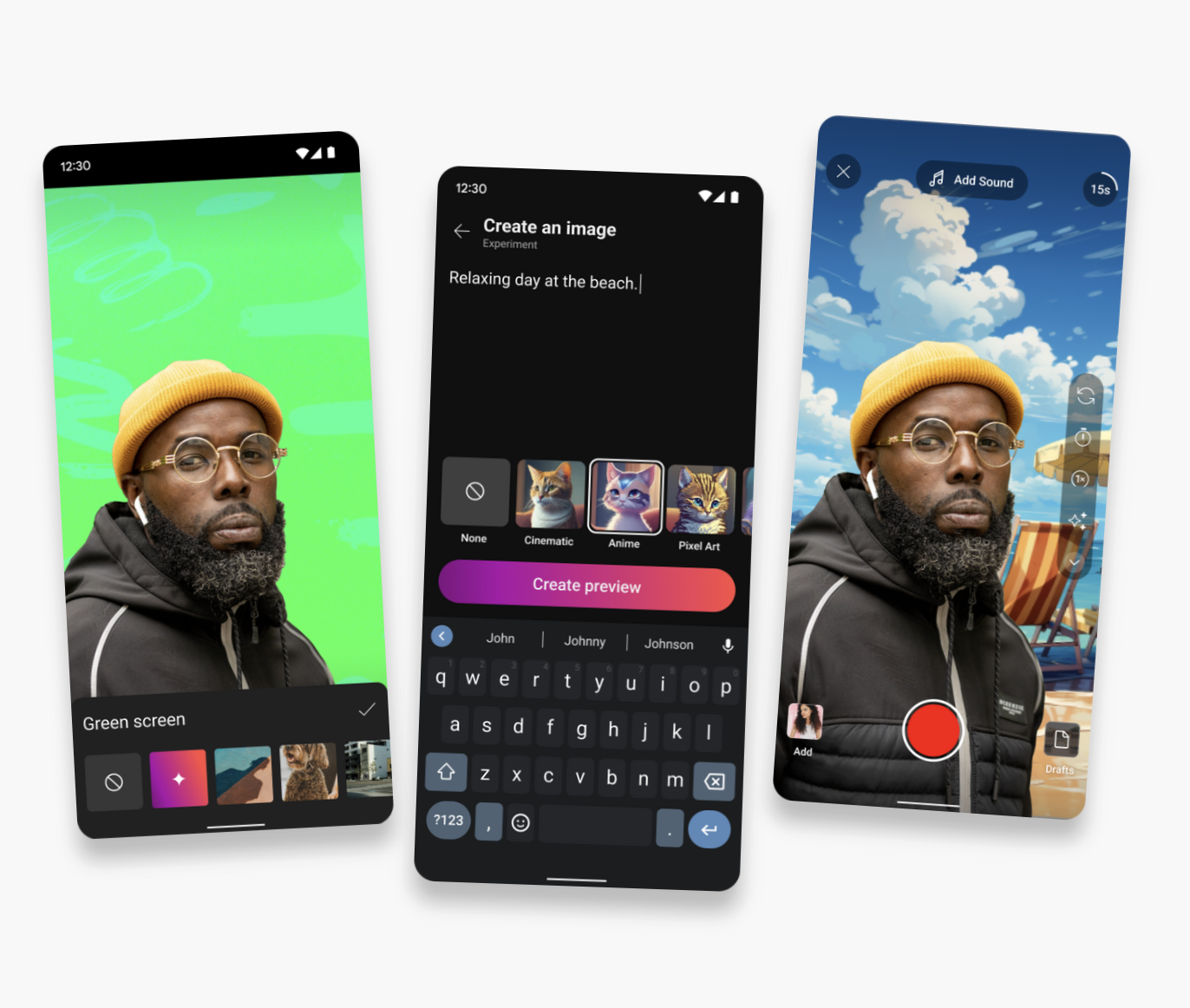
The hurdle
YouTube’s DreamScreen let creators generate any image from a text prompt. But a blank prompt box is just another blank canvas: most users knew a “good” output when they saw it, but they could not write the input needed to generate a “good” output in a prompt.
To complicate things further, the base model is inconsistent by nature: without style conditioning, the same prompt could swing from photoreal to cartoonish to off-model on a different run. Even the best prompt engineers struggled to maintain consistency between iterations on nearly identical prompts.
Better UI wouldn't fix inconsistent outputs, and a better model alone wouldn't fix the blank-canvas problem. We needed a product layer — curated, selectable styles — that removed prompt engineering entirely while guaranteeing a consumer-grade quality bar.
The approach
Models that create high-quality images require high-quality training data. Getting there meant treating visual craft as a first-class input, not an afterthought — and staffing the team accordingly.
I tapped an Art Director to own the creative quality bar and translate it into a spec the model could actually learn from — someone who could review outputs against craft standards, and adjust direction in real time as we saw what the model responded to. Then, I engaged creative agency Anyways, whose global network of illustrators gave us production capacity and stylistic range we couldn't have built in-house fast enough. Together, we commissioned multiple style datasets — oil pastel, modern polygon, anime, pixel art, and more — each with 70+ bespoke illustrations spanning a diverse range of people, places, and things. The Art Director set the bar; the agency delivered the scale to hit it. That let the core team stay focused on fine-tuning and product while the training data was engineered with equal rigor.
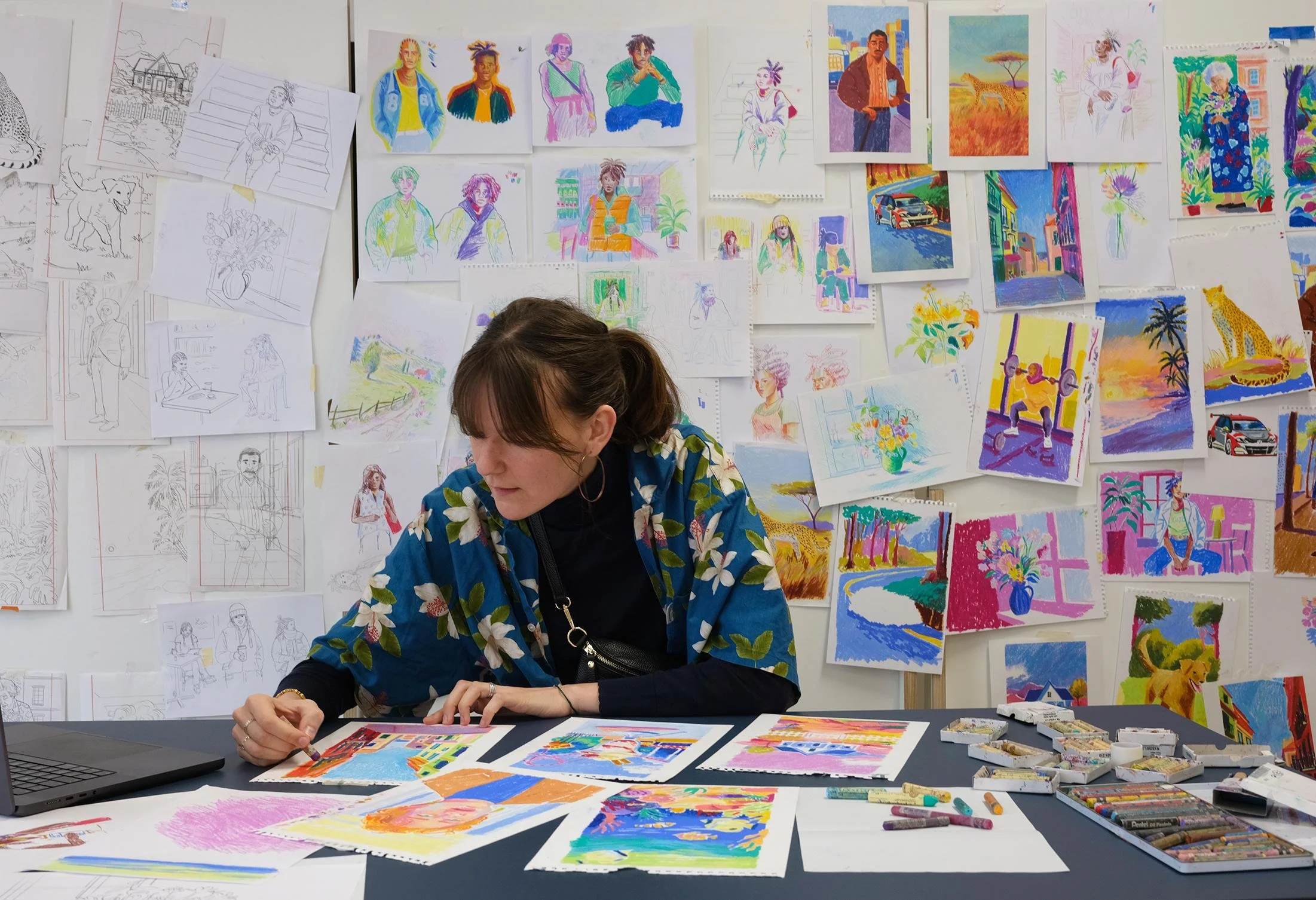
Artist Cécile Despretz at work on the oil pastel style
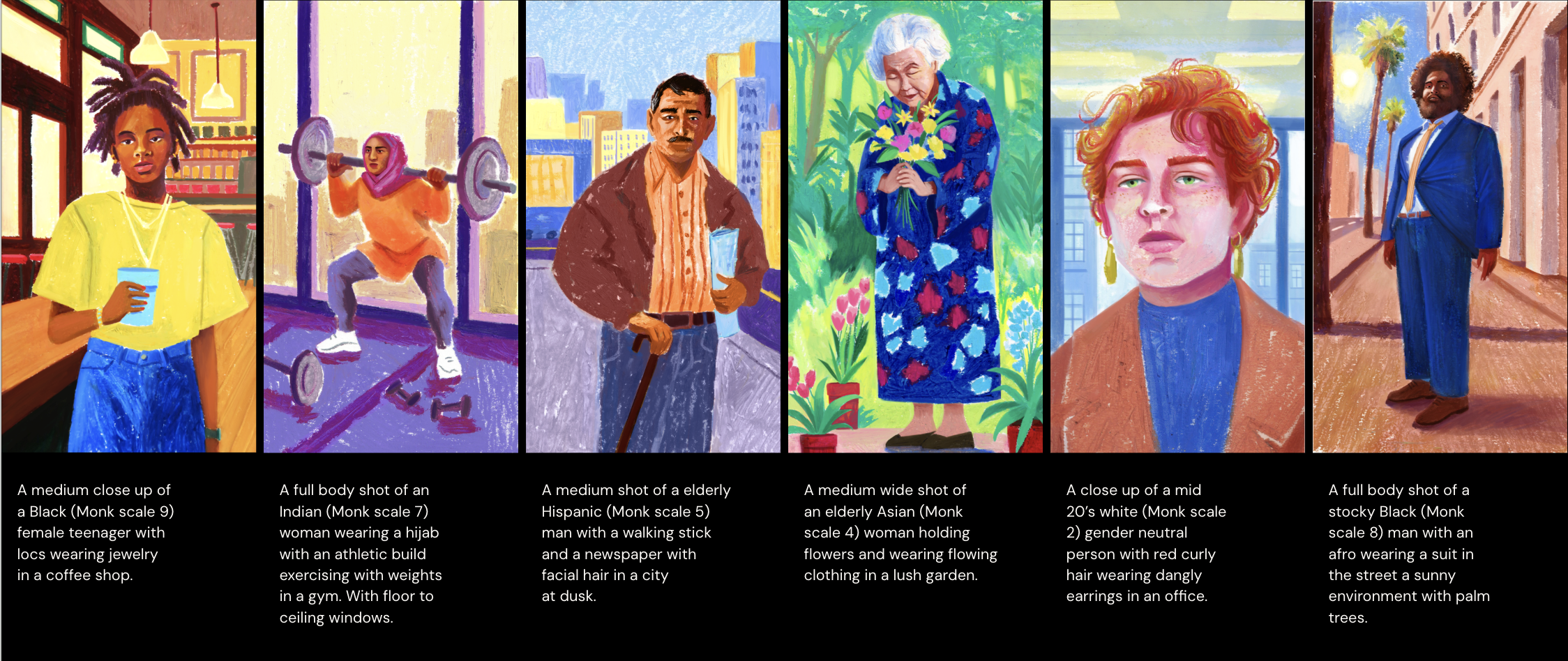
An example of artist outputs and their prompts, which became the “style guide” to train the model.
The result
The presets hit a high visual bar while generating diverse, prompt-aligned outputs at low latency. Six weeks post-launch, over [redacted]% of published generations used our fine-tuned presets — proof that users chose curated consistency over open-ended prompting, and that the dataset investment paid off in the model itself.
The below snapshot illustrates why. The base model (far left) defaults to a literal, photorealistic reading of the prompt — a person in a dinosaur costume on a real bike, poorly framed, only slightly recognizable as SF. It has no visual identity: no intentional color, linework, or craft signature, so it reads as a novelty prop rather than a usable creative asset. The four fine-tuned styles, by contrast, each apply a distinct, recognizable aesthetic that a creator can trust and drop straight into finished content and, just as importantly, continue to create with a consistent look and feel.
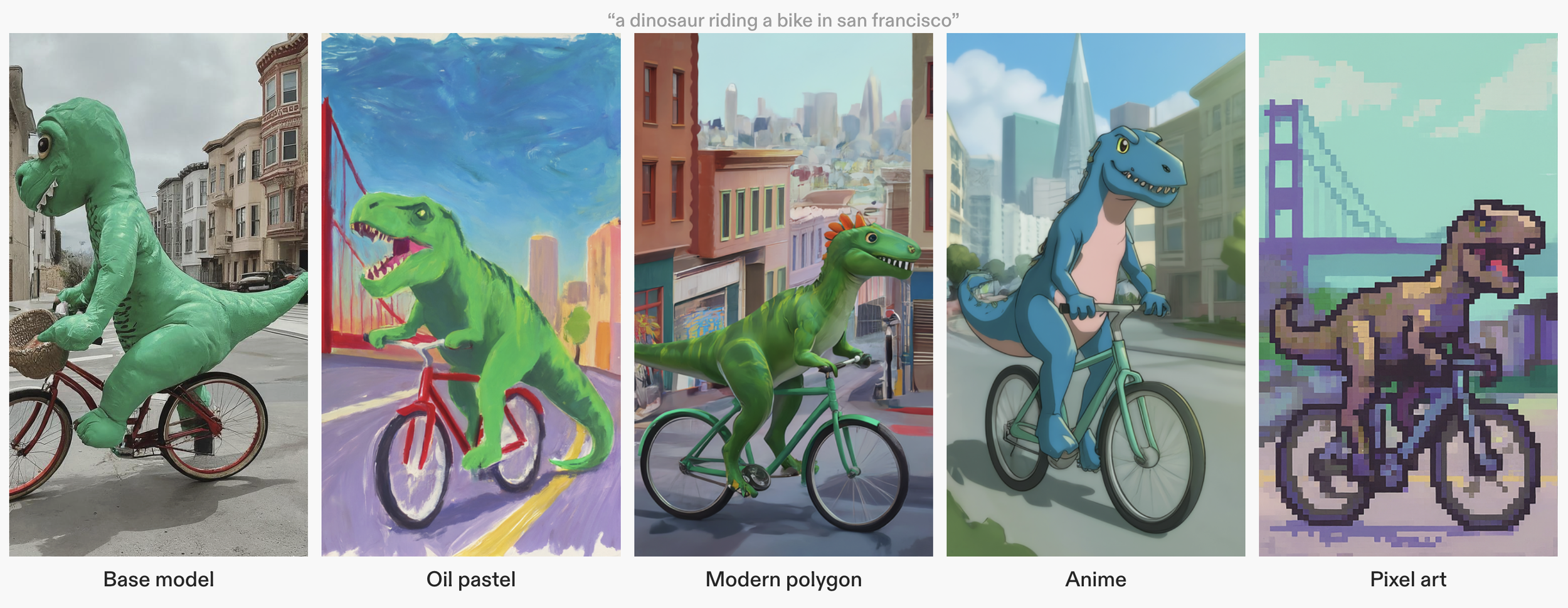
Base model (left) versus four fine-tuned style outputs showing improved “art direction”