Case Study: Gen AI Playground @ YouTube
The HURDLE
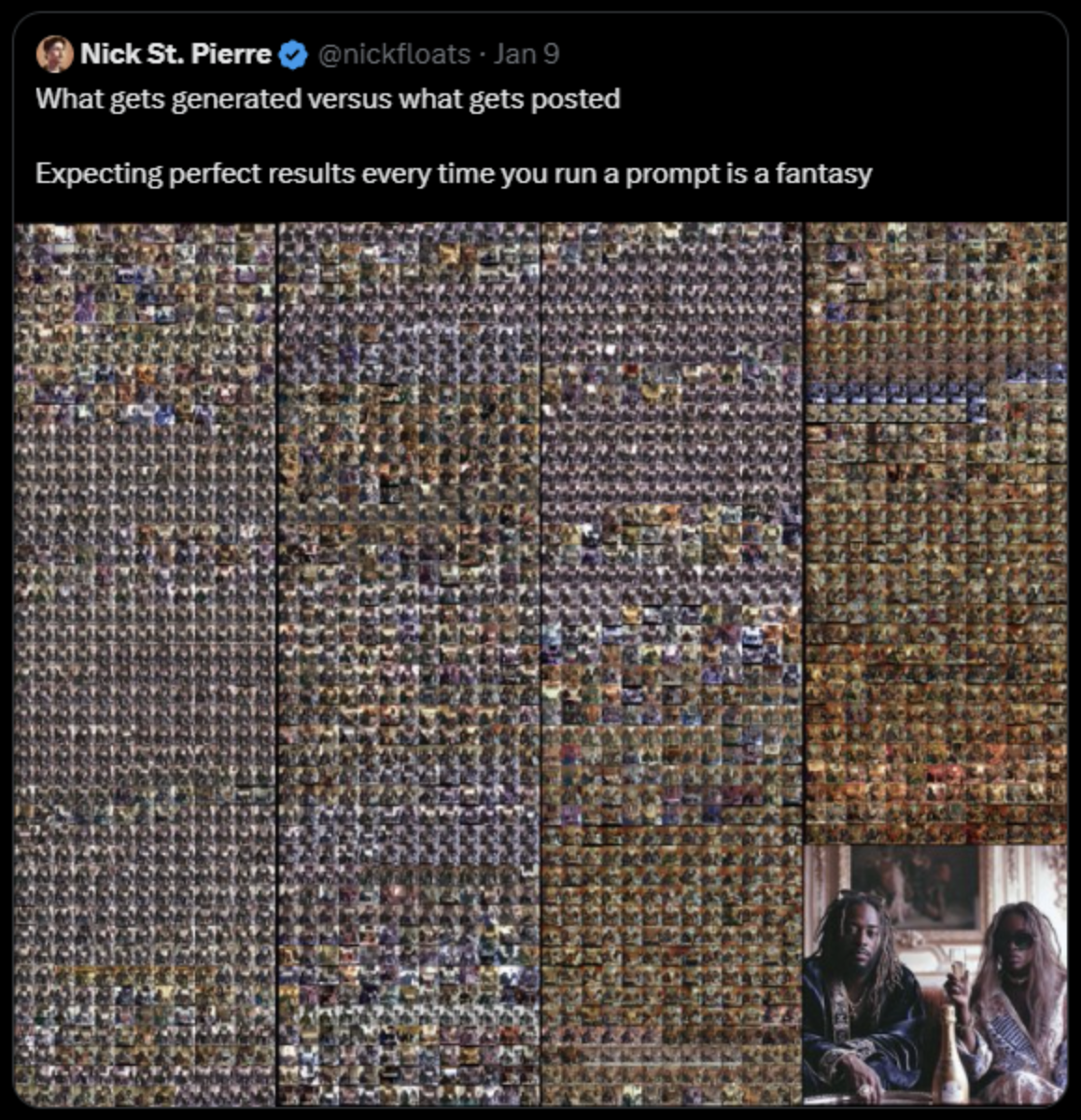
The potential of generative image and video to YouTube creators seemed obvious, but the feedback we heard was clear. They were lost in the face of text input generation: they lacked inspiration, didn't know how to prompt, and had no sense of what "good" even looked like.
Making it worse, our generative tools were scattered across the camera and video editing workflow. They were built for creators who already knew what they wanted, with no room to explore before hitting publish. In a linear video creation journey, the inherently iterative nature of prompting felt tedious and distracting.
The real gap wasn't tool capability, it was architecture. There was no space for a newbie creator to discover what was possible, or practice, without the pressure of publishing a Short.
The strategy
Getting past "average" results takes iteration and a point of view. We had to show what this new creative process looked like so creators could see exactly what was possible and copy their way into a first success rather than starting from zero.
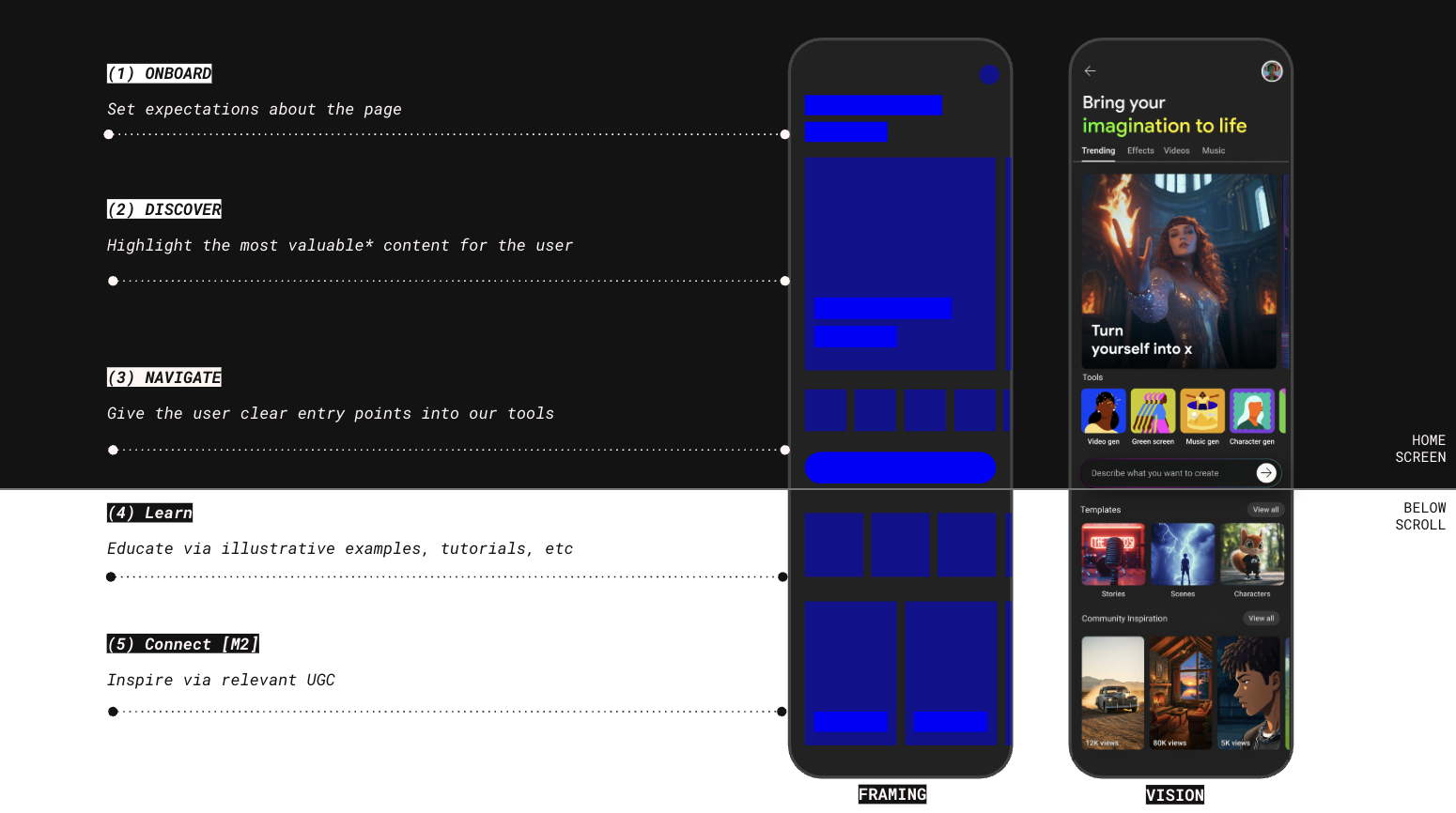
I set the design strategy to build a dedicated, top-level surface: a sandbox giving users direct access to our generative capabilities outside the publishing flow, with no blank canvas, no tooltips, and no pressure. A clear menu of our latest capabilities, high-quality outputs (and just as important, exposing the inputs behind them), and inspirational UGC.
I led design and cross-functional partners through an aggressive MVP scope to launch in one quarter, prioritizing an architecture that unfolded with users’ technical understanding and creative confidence.
The result
Launched in July 2025 as a new top-level entry point in the Shorts camera, AI Playground drove a ~2.1x increase in daily GenAI usage and a 1.7x increase in Shorts published with generative assets in its first week — with generation activity up ~110% overall (Image +130%, Video +118%, Music +85%, Effects +60%) and Shorts creation among GenAI tool users up 73%.
The results confirmed the bet: the barrier to adoption wasn't the models, it was the absence of a space designed for exploration, and giving users room to play converted directly into more creation and more publishing.